

Please note: I may earn commissions from qualifying purchases if you shop through links on this page. More info.
Pro Tips for Choosing the Right Plants (and Avoiding Regrets)
Choosing the right plants for your garden can be exciting—but it also takes some careful thought. Overlooking key factors during plant selection can leave you with a mismatched design or, worse, plants that struggle or fail to thrive.
In this article, I’ll share practical tips to help you master plant selection and create a garden that thrives in your unique space.
If you’d rather watch than read, check out my YouTube video on this topic:
Subscribe to my YouTube channel for more gardening videos!
1: Choose Plants That Match Your Site Conditions

One of the best ways to set your garden up for success is to choose plants that match the specific conditions of each area in your yard. When plants are well-suited to your local climate, soil and sunlight, they’ll grow healthier, require less maintenance and thrive—with less effort on your part.
There are several key factors to consider when selecting plants:
- Local climate — Will the plant handle the heat, cold and seasonal changes in your region? Learn your gardening zone.
- Sunlight exposure — Full sun is 6 or more hours per day, while less than 3 hours is considered full shade. Know how much light your garden bed gets. How to create a sun map.
- Soil conditions — You can get a soil test, but you can also tell a lot by feeling your soil. Is it sandy, rich or heavy clay? Tips for improving your soil.
- Water needs — Identify areas that stay dry or have standing water. Choosing plants that match these moisture conditions will save you time and reduce supplemental watering. My favorite watering tools.
- Wildlife and pests — If deer, rabbits or pests are common in your area, do some research and look for resistant plant varieties or plan how you’ll protect your plants.
If you’re new to gardening, you’ll love my Beginner Flower Gardening 101 article that walks you through all of these considerations.
Remember, conditions can vary from one part of your yard to another—so think about each planting area separately. For example, you might have sunny, dry spots in one area and shady, damp areas in another, even on the same property.
By researching and choosing plants suited to your specific environment, you’ll create a garden that’s healthier, more resilient and much easier to maintain.
2: Research Plants to Avoid Invasive or Aggressive Spread

Choosing the right plants for your garden means going beyond looks—you also want to make sure they won’t take over your yard or harm the local environment. Invasive plants, in particular, can spread rapidly, choke out other plants and become nearly impossible to remove once established.
Invasive and aggressive plants are often confused, but they’re not the same.
Invasive plants should never be planted—there’s really no situation where they’re a good choice. Before buying, always search “Is [plant name] invasive in [your location]?” to double-check. This simple step can save you a lot of trouble.
Aggressive plants, on the other hand, aren’t always as clear-cut. Some plants might behave well in certain areas but spread uncontrollably in others. That’s why it’s so important to do your homework.
One of my favorite tools for checking plant behavior is Dave’s Garden Plant Files, a huge online plant database where real gardeners share feedback on how plants perform in different conditions.
If you’re unsure about the difference between invasive and aggressive plants, click here to learn more about the meanings of each. Understanding this distinction will help you make smart plant choices that are safe for your landscape and easier to manage.
Further reading:
- Why Choose Native Plants Instead of Non-Native Invasive Plants In Your Landscape
- Are Non-Native Plants Always Invasive Plants?
- 9 Online Nurseries You Can Trust (and 1 You Can’t)
3: Plant in Masses for Bigger Impact
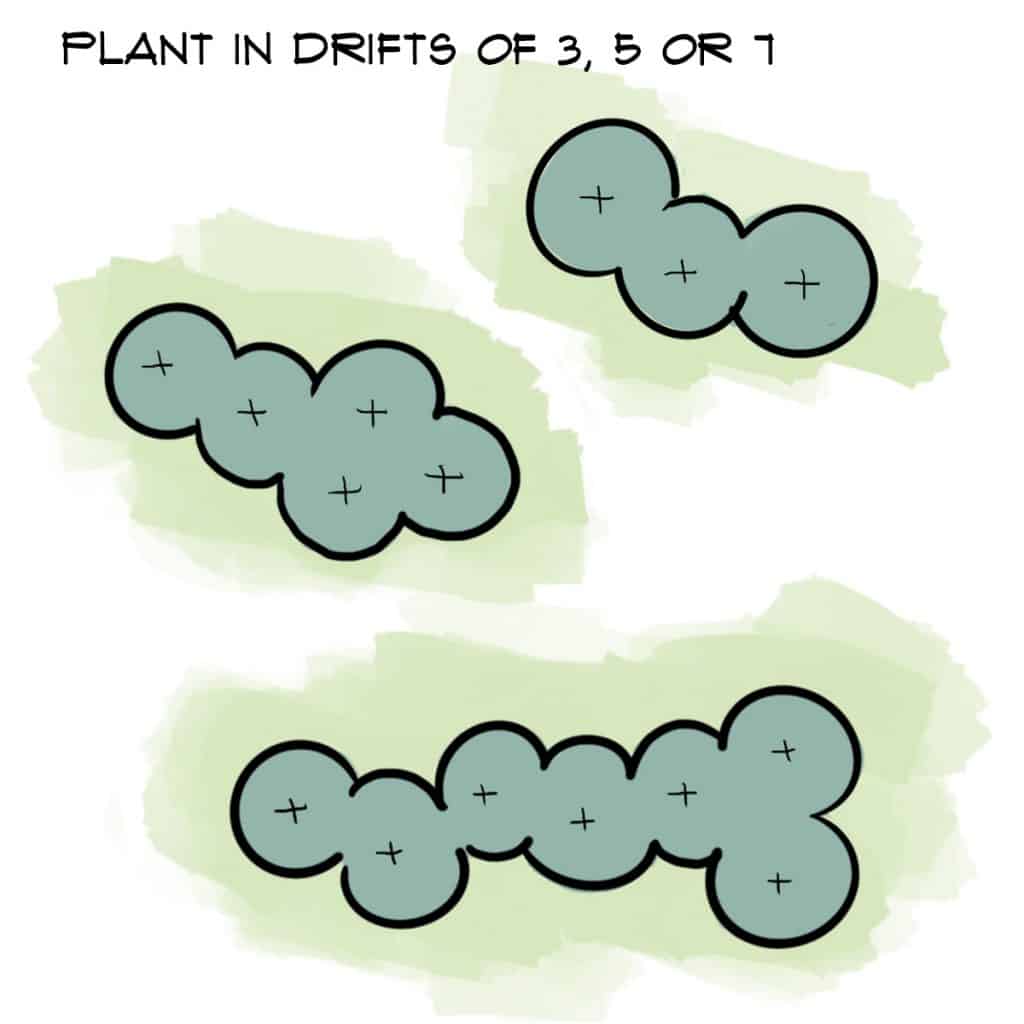
One of the easiest ways to create a bold, cohesive look in your garden is to plant in groups or masses rather than scattering single plants around. Landscapes are big spaces, and many plants are quite small on their own. By planting larger quantities of the same plant, you create strong visual impact that feels balanced with the scale of your home and garden.
For example, instead of buying one salvia, one sedum and one iris, you’ll usually get a much more dramatic and polished look by planting a group of 12 salvias. This repetition helps create flow and emphasizes the plant’s presence. It also keeps the design looking intentional instead of messy.
Planting in small, scattered quantities—what I like to call the “onesie-twosies” approach—is a common DIY mistake. Without a well-thought-out plan, this often leads to a disorganized and patchy appearance. By embracing grouping, you’ll make your design feel more cohesive, lush and impactful.
7 Pro Tips for Choosing the RIGHT Plants (Free Guide)
This FREE 11-page PDF guide will walk you through the 7 key questions to ask yourself when picking the perfect plants for your landscape.
I can assure you there’s something on this list that you haven’t discovered, yet!
4: Plan for Seasonal Interest All Year Long
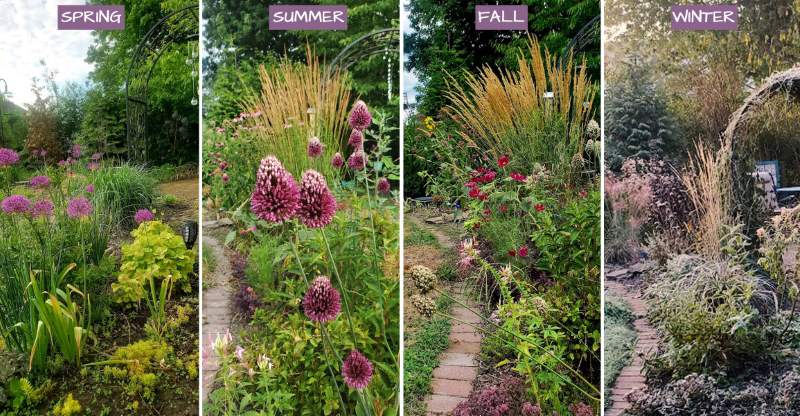
To keep your garden looking vibrant through every season, it’s important to think beyond just spring blooms. Most perennials only flower for a few weeks, which means if you’re only planting what you see at the nursery in spring, your garden might lack color and interest for the rest of the year.
A simple trick? Visit the nursery in different seasons. Yes, that means shopping more—but it’s one of the best ways to discover plants that shine in summer, fall and even winter. If that’s not an option, there are plenty of online tools to help you research bloom times—including all of my plant list articles that make it easy to plan with confidence. Or, take my Design Your 4-Season Garden course for step-by-step instructions and support!
Of course, there’s more to creating a four-season garden than just knowing when a plant blooms. Foliage, texture, structure and seasonal transitions all play a part. To dive deeper into this, check out my Expert Guide to Year-Round Garden Beauty.
If you want step-by-step help designing a garden that looks good in every season, my Design Your 4-Season Garden course walks you through the entire process.
5: Focus on the Overall Feel, Not Just Individual Plants

A beautiful garden is more than a collection of pretty plants—it’s about how the entire space comes together to create a mood, vibe or feeling. Instead of focusing only on plant-by-plant choices, step back and view your landscape like an artist views a canvas. The goal is to create a complete picture, not to agonize over every individual brushstroke.
One of the easiest ways to uncover your garden’s desired feel is to gather inspiration photos of gardens you love. Look closely at those images and ask yourself: What is it about these spaces that draws me in?
Is it the romantic feel? The vibrant energy? The peaceful, secluded atmosphere?
Sure, you might notice specific plants like roses or hydrangeas—and if you love them, you can absolutely include them. But more often than not, it’s the overall mood that captures your attention, not just the plants themselves.
Write down a few words that describe how these gardens make you feel, then use those as your guide when designing your own space. Plants will support and enhance the feeling you want to create, but the magic comes from seeing the design as a whole, not just the individual parts.
Additional Plant Selection Tips to Consider
Incorporate Native Plants.
Native species are adapted to your area’s conditions and often require less maintenance. They support local wildlife and help create a sustainable garden. Learn the difference between native and invasive plants.
Choose Plants With Complementary Colors.
Consider how bloom colors, foliage and textures will interact. A well-coordinated garden color palette enhances the aesthetic appeal of your garden.
Include Pollinator-Friendly Plants.
Attract beneficial insects like bees and butterflies by incorporating nectar-rich colorful flowers and host plants into your design.
Account For Plant Growth Over Time.
Understand the mature size and shape of plants to avoid overcrowding and maintain balance in your landscape design as the garden matures.
Mix Annuals And Perennials.
Combine these types of plants to enjoy vibrant blooms from annuals and the consistency of perennials year after year. Learn about the different types of flowers and plants to choose from.
Avoid Cookie-Cutter Plant Recommendations.
Online services such as ShrubHub frequently suggest plants that aren’t suited to your site or needs. My shrubhub review explains why their approach can create more problems than solutions.
More Gardening Tips & Advice You’ll Love
- How to Start Seeds Without Wasting Time or Space
 This seed starting guide walks you through planning seeds step by step, including layout, timing and spacing, so seed starting feels clearer and calmer.
- 14 Budget-Friendly Landscaping Tips to Save Money
 Design your dream landscape on a budget with these cost-saving tips that won’t sacrifice style or curb appeal.
- Get the Right Fit: A Guide to Landscape Specs and SizingAvoid common landscape sizing mistakes. Get tips for walkways, patios and garden beds to create a functional, beautiful outdoor space.
- 9 Garden Color Tips for a Bold, Beautiful BackyardLearn garden color tips to create bold, eye-catching plant combinations and bring year-round color to your backyard.


Shop my Amazon storefront for my essential gardening books & tool recommendations!

